
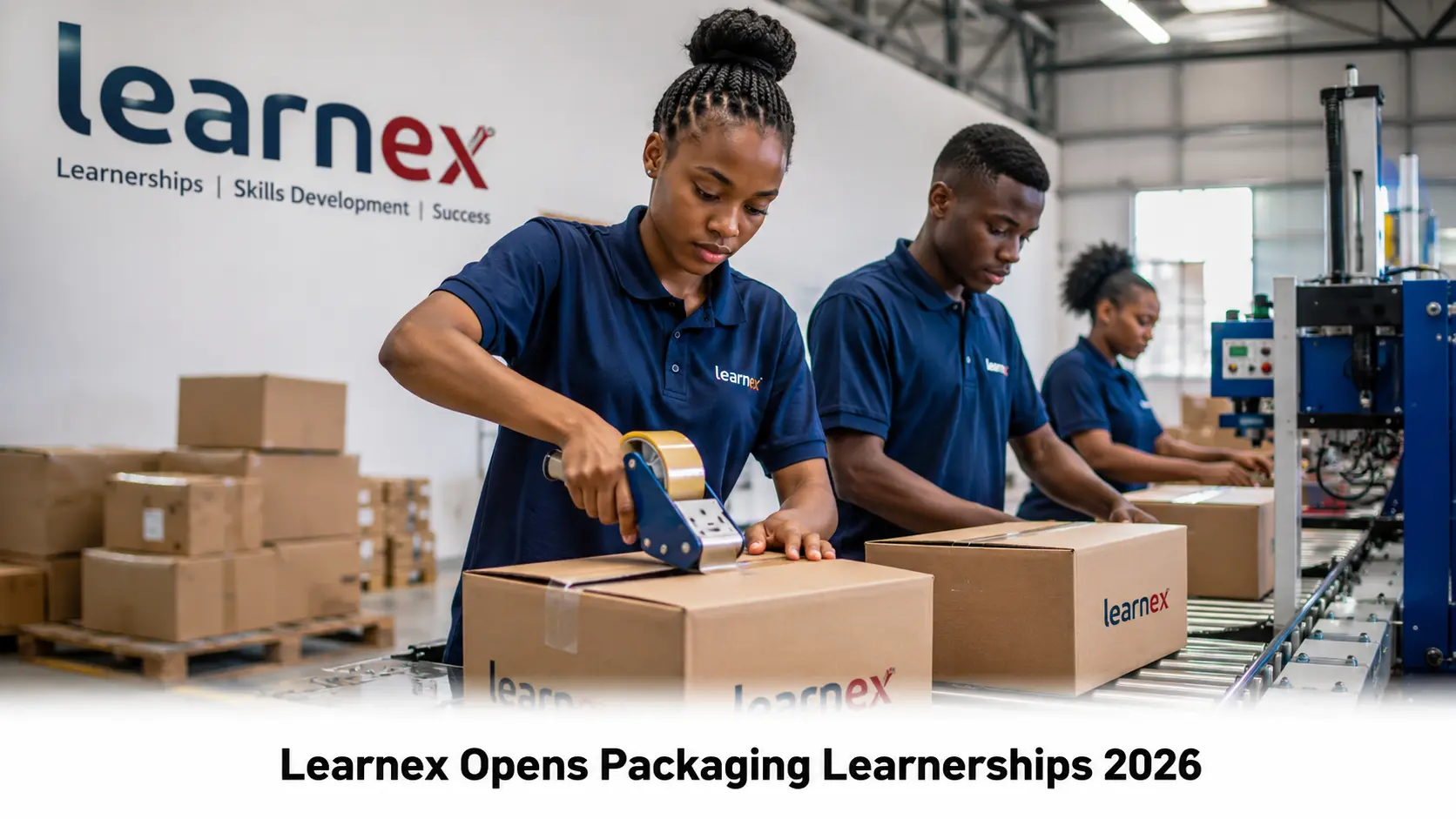
Packaging Learnerships 2026: Your Opportunity to Gain Skills and Earn a Monthly Stipend
If you’re an unemployed young South African looking to build a career in manufacturing, Packaging Learnerships 2026 could be the opportunity you’ve been waiting for.
These structured workplace training programmes combine accredited learning with hands-on experience in the packaging and manufacturing industry. Participants receive a monthly stipend of approximately R4,600, allowing them to earn an income while gaining valuable workplace skills.
Packaging remains one of South Africa’s most important industries, supplying products to sectors such as food production, pharmaceuticals, agriculture, retail, and consumer goods. As demand for skilled workers continues to grow, learnerships provide an effective pathway into permanent employment.
If you’re ready to learn, work, and develop practical skills, this programme could be your first step towards a rewarding career.
Learnership Overview
| Programme Details | Information |
|---|---|
| Programme | Packaging Learnerships 2026 |
| Industry | Manufacturing & Packaging |
| Duration | Approximately 12 Months |
| Monthly Stipend | Approximately R4,600 |
| Qualification | National SETA-Accredited Qualification |
| Minimum Qualification | Grade 11 or Grade 12 |
| Experience Required | None |
| Employment Type | Fixed-Term Learnership |
| Closing Date | Expected around 15 August 2026 (may vary by employer) |
What Are Packaging Learnerships?
Packaging Learnerships are structured training programmes that combine formal classroom learning with practical workplace experience.
Learners are employed on fixed-term contracts while completing an accredited qualification recognised within South Africa’s National Qualifications Framework (NQF).
Throughout the programme, participants spend time both in training sessions and on the production floor, where they learn directly from experienced supervisors and industry professionals.
This dual approach ensures learners graduate with practical experience as well as nationally recognised skills.
You can also visit our Whatsapp Channel For More Opportunities Update
Why the Packaging Industry Matters
The packaging industry supports almost every major manufacturing sector in South Africa.
From food and beverages to pharmaceuticals and consumer products, businesses rely on skilled packaging employees to maintain production quality and efficiency.
The industry continues to create opportunities because of:
- Expansion of food manufacturing.
- Growth in retail distribution.
- Increased demand for recyclable packaging.
- Investment in modern production facilities.
- Ongoing need for skilled production operators.
For many young people, packaging learnerships provide an accessible entry into stable industrial careers.
What You Will Learn
Depending on the host employer, learners may receive practical training in:
- Packaging machine operation.
- Production line processes.
- Quality assurance.
- Product inspection.
- Workplace safety procedures.
- Materials handling.
- Basic maintenance.
- Manufacturing processes.
- Teamwork and communication.
- Production reporting.
These skills are transferable across many manufacturing industries.
Monthly Stipend
Successful learners receive a monthly stipend of approximately R4,600.
The stipend is intended to help cover essential expenses such as:
- Daily transport.
- Meals.
- Personal living costs.
- Basic work-related expenses.
Some employers may also provide:
- Protective clothing.
- Safety equipment.
- Additional transport support.
- Workplace uniforms.
Support offered may differ depending on the training provider and host employer.
Who Can Apply?
Most Packaging Learnerships are open to unemployed South Africans who meet the following requirements.
Educational Requirements
Applicants should have:
- Grade 11 or Grade 12.
- Basic literacy and numeracy skills.
Subjects such as Mathematics, Technical Mathematics, Physical Science or Engineering Studies may strengthen an application but are not always compulsory.
Citizenship
Applicants must:
- Be South African citizens or permanent residents.
- Possess a valid South African ID document.
Age Requirements
Most programmes require applicants to:
- Be at least 18 years old.
- Meet any age requirements specified by the recruiting employer.
While many programmes target youth, some do not specify a maximum age limit.
Employment Status
Preference is generally given to:
- Unemployed applicants.
- Individuals who are not currently studying full-time.
- First-time learnership participants.
Meeting the minimum requirements does not automatically guarantee selection.
Skills Employers Look For
Packaging companies often look beyond academic qualifications.
Successful candidates usually demonstrate:
- Reliability.
- Good attendance.
- Positive attitude.
- Willingness to learn.
- Ability to follow instructions.
- Teamwork.
- Good communication.
- Attention to detail.
- Commitment to workplace safety.
- Strong work ethic.
These qualities are essential in manufacturing environments.
What Happens During the Learnership?
Once selected, learners begin a structured programme that combines practical work experience with formal training.
Participants may:
- Attend classroom-based training.
- Complete workplace assignments.
- Learn from experienced mentors.
- Participate in practical assessments.
- Build a portfolio of evidence.
- Receive ongoing performance evaluations.
Attendance, discipline, and workplace behaviour form an important part of the assessment process.
Benefits of Completing a Packaging Learnership
Participants may benefit from:
- Nationally recognised qualification.
- Practical workplace experience.
- Monthly financial support.
- Improved employability.
- Professional references.
- Industry exposure.
- Workplace confidence.
- Career development opportunities.
- Foundation for further studies.
- Increased chances of permanent employment.
Career Opportunities
After completing the learnership, successful learners may pursue careers including:
- Packaging Operator.
- Production Assistant.
- Manufacturing Operator.
- Machine Operator.
- Quality Control Assistant.
- Warehouse Assistant.
- Materials Handler.
- Production Controller.
- Dispatch Assistant.
- Production Supervisor (with experience).
Many learners continue building their careers through further technical training or supervisory development programmes.
How to Apply
Applications are generally completed online through the official recruitment platform provided by the employer or accredited training provider.
Step 1: Complete the Application Form
Access the official online application form when applications open.
Step 2: Prepare Your Documents
Applicants are typically required to submit:
- Updated Curriculum Vitae (CV).
- Certified copy of South African ID.
- Certified copy of Grade 11 or Grade 12 certificate.
- Proof of address (where requested).
Ensure all documents are clear, complete, and up to date.
Step 3: Submit Your Application
Complete every section of the application form accurately before uploading the required documents.
Double-check your contact information to ensure recruiters can reach you if you are shortlisted.
Step 4: Attend Assessments
Shortlisted applicants may be invited to complete:
- Basic literacy or numeracy assessments.
- Interviews.
- Aptitude tests.
- Workplace readiness assessments.
Preparation and punctuality can improve your chances of success.
Tips for Success
To make the most of your learnership:
- Arrive at work on time every day.
- Follow all workplace safety procedures.
- Show initiative and willingness to learn.
- Ask questions when unsure.
- Respect supervisors and colleagues.
- Keep accurate training records.
- Manage your monthly stipend wisely.
- Maintain a positive attitude throughout the programme.
Many employers offer permanent opportunities to learners who consistently perform well.
Frequently Asked Questions
How much is the monthly stipend?
Most Packaging Learnerships offer approximately R4,600 per month, although the amount may vary between employers.
Can I apply with Grade 11?
Yes. Many programmes accept applicants with Grade 11, while others may require Grade 12.
Do I need previous work experience?
No. These programmes are designed for individuals with little or no previous work experience.
Will I receive a qualification?
Yes. Learners generally complete a SETA-accredited qualification upon successfully meeting all programme requirements.
Does completing a learnership guarantee permanent employment?
No. However, many employers consider successful learners for permanent or contract positions when opportunities become available.
When do applications close?
Application deadlines vary depending on the employer. Many Packaging Learnerships are expected to close around July 2026, but applicants should always confirm the official closing date for each opportunity.
Why Packaging Learnerships Are Worth Considering
Packaging Learnerships continue to provide one of the most practical pathways into South Africa’s manufacturing industry. By combining structured training with real workplace experience, these programmes help young people develop valuable technical skills while earning a monthly stipend.
For unemployed South Africans who are committed to learning, working hard, and building a sustainable career, a packaging learnership can open the door to long-term employment and future career advancement in one of the country’s most important industrial sectors.
Editorial Policy
This article has been independently prepared to provide general information about Packaging Learnerships available in South Africa. Programme requirements, stipend amounts, training providers, and closing dates may vary depending on the employer or accredited SETA provider. Applicants should always verify information through the official recruitment advertisement before applying.
Sources and References
- Department of Higher Education and Training (DHET)
- Quality Council for Trades and Occupations (QCTO)
- South African Qualifications Authority (SAQA)
- Relevant SETA learnership guidelines
Disclaimer: This article is an independent informational guide and is not affiliated with any specific employer or training provider. Stipends, programme requirements, duration, and application dates may differ between learnership providers. Applicants should consult the official recruitment notice for the most up-to-date information before submitting an application.
