
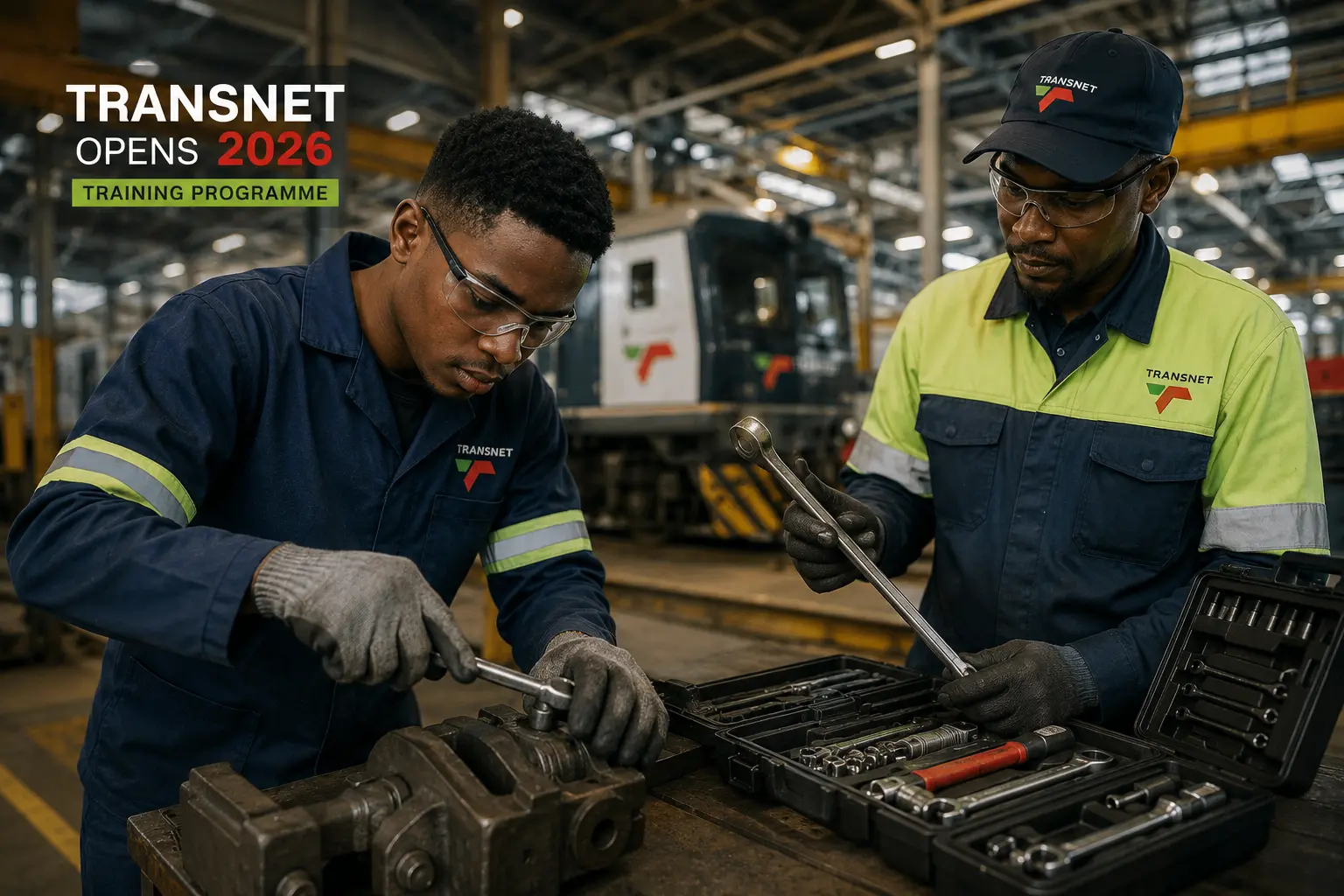
Transnet’s 2026 Training and Work Integrated Learning (WIL) Programmes are creating new opportunities for unemployed South African youth, TVET graduates, and aspiring professionals looking to gain valuable workplace experience in one of the country’s most important state-owned enterprises.
As South Africa continues to face high youth unemployment levels, structured workplace training programmes remain among the most effective pathways into long-term employment. Through its latest intake, Transnet is offering practical training opportunities in technical and non-technical disciplines, helping participants gain industry experience while developing skills that are in demand across the transport, logistics, engineering, and port operations sectors.
The programmes are designed to bridge the gap between academic studies and workplace requirements, giving successful applicants exposure to real-world projects and operational environments within the Transnet network.
Why the Transnet Training Programme Matters in 2026
Many graduates and TVET students complete their studies but struggle to secure employment because employers often require practical experience. Work Integrated Learning (WIL) programmes address this challenge by allowing participants to apply classroom knowledge in actual working environments.
Transnet’s training initiatives have become highly sought-after because they offer structured learning, mentorship, and exposure to South Africa’s logistics and freight transport industry.
For many participants, these programmes serve as a stepping stone toward permanent employment opportunities within the transport sector and beyond.
Overview of the 2026 Training Opportunities
The 2026 intake includes several development pathways aimed at different educational backgrounds and career interests.
Technical Work Integrated Learning Programme
This stream focuses on engineering-related disciplines and provides practical workplace exposure for students who need experiential learning to complete their qualifications.
You can also visit our Whatsapp Channel For More Opportunities Update
Participants may gain exposure to:
- Mechanical Engineering
- Electrical Engineering
- Civil Engineering
- Industrial Engineering
- Technical maintenance environments
- Operational engineering support
The programme is particularly suitable for TVET students who have completed their N6 studies and require workplace training before obtaining their National Diploma.
Non-Technical Work Integrated Learning Programme
Transnet is also offering opportunities for candidates pursuing careers outside technical fields.
Areas may include:
- Human Resources
- Public Relations
- Administration
- Supply Chain Management
- Logistics Support
- Business Operations
- Corporate Services
These positions provide valuable workplace experience in professional office environments while helping participants develop administrative and business skills.
Technician-in-Training Programme
For candidates interested in technical careers, the Technician-in-Training Programme offers a more extensive development pathway.
Unlike standard 12-month WIL placements, these programmes may extend up to 18 months or longer depending on operational requirements and specialization areas.
Participants receive structured technical development designed to prepare them for future roles within engineering and infrastructure operations.
Programme Duration
Most Transnet Work Integrated Learning opportunities run for:
- 12 months for standard training programmes
- 18 months for Technician-in-Training programmes
- Up to 24 months for selected specialized development pathways
The extended duration allows participants to gain meaningful workplace exposure while developing practical competencies that employers value.
Monthly Stipend and Financial Support
One of the major attractions of Transnet’s development programmes is the financial support provided to qualifying participants.
While stipend amounts can vary depending on programme type, location, and discipline, some technical training positions have previously offered stipends of approximately R6,500 per month.
The stipend assists participants with:
- Transportation costs
- Meals and daily expenses
- Communication costs
- General living expenses while attending training
Applicants should note that stipend structures may differ across programmes and official vacancy advertisements should always be consulted for confirmed remuneration details.
Locations Across South Africa
Training opportunities are available at various Transnet operations throughout South Africa.
Potential placements may include:
- Port terminals
- Engineering facilities
- Rail operations centres
- Corporate offices
- Logistics hubs
- Regional operational divisions
Certain programmes may prioritise applicants residing within specific municipalities or districts depending on local development objectives and operational needs.
Previous recruitment campaigns have included preferences for applicants from areas such as King Cetshwayo District Municipality and other targeted development regions.
Who Can Apply?
To qualify for consideration, applicants are generally expected to meet the following criteria.
Citizenship Requirements
Applicants must:
- Be South African citizens
- Possess a valid South African identity document
Age Requirements
Most programmes target:
- Unemployed youth between 18 and 35 years of age
Educational Requirements
Depending on the programme, applicants may require:
- Grade 12 (Matric)
- N6 qualification from a TVET College
- National Diploma
- Degree in a relevant field
- Relevant technical or professional qualifications
TVET students seeking workplace experience to complete diploma requirements are strongly encouraged to apply where applicable.
Required Supporting Documents
Candidates should prepare the following documents before beginning their application:
Updated Curriculum Vitae (CV)
Ensure your CV includes:
- Contact details
- Educational history
- Skills and competencies
- References where available
Certified Identity Document
Applicants must provide a certified copy of their South African ID.
Certified Academic Qualifications
Depending on eligibility requirements, applicants should submit:
- Certified Matric certificate
- Certified N6 qualification
- Diploma or degree certificates where applicable
TVET Institution Letter
For Work Integrated Learning opportunities linked to N6 qualifications, applicants may need a letter from their institution confirming the requirement for experiential training.
How to Apply
Applications for Transnet’s 2026 Training and Work Integrated Learning Programmes should be submitted through the official Transnet recruitment platform.
Applicants are advised to:
- Visit the official Transnet Careers Portal.
- Create an online candidate profile.
- Search for available training and WIL opportunities.
- Complete the online application form.
- Upload all required supporting documents.
- Review information carefully before submission.
Candidates should only apply through official Transnet recruitment channels to avoid recruitment scams and fraudulent job advertisements.
Why Early Applications Are Recommended
Training opportunities at Transnet often attract thousands of applications from across the country.
Submitting early can help candidates:
- Avoid missing deadlines
- Prevent technical issues near closing dates
- Ensure documents are uploaded correctly
- Demonstrate professionalism and preparation
Incomplete applications may be excluded from the selection process.
Career Benefits of Joining Transnet
Participating in a Transnet training programme provides more than temporary workplace experience.
Benefits may include:
Industry Exposure
Participants gain first-hand experience within one of Africa’s largest freight logistics organisations.
Professional Development
Learners develop workplace competencies such as:
- Communication skills
- Teamwork
- Problem-solving
- Project coordination
- Technical expertise
Networking Opportunities
Working alongside experienced professionals allows participants to build valuable industry connections.
Improved Employability
Practical experience often strengthens future job applications and increases competitiveness in the labour market.
Expert Perspective: The Growing Importance of Work Integrated Learning
South Africa’s labour market increasingly rewards candidates who combine formal qualifications with practical experience.
According to skills development specialists, employers frequently prioritise applicants who have demonstrated their abilities in workplace environments rather than relying solely on academic achievements.
Programmes such as Transnet’s Work Integrated Learning initiative therefore play a critical role in preparing young South Africans for sustainable employment opportunities.
As infrastructure, logistics, engineering, and transport sectors continue evolving, workplace-based training remains an essential pathway for developing the next generation of skilled professionals.
Final Thoughts
The Transnet Training and Work Integrated Learning Programme 2026 presents a valuable opportunity for unemployed youth, graduates, and TVET students seeking practical workplace experience.
With opportunities spanning engineering, logistics, administration, public relations, and technical development, the programme offers participants a chance to gain real industry exposure while developing skills that can support long-term career growth.
Eligible candidates are encouraged to prepare their documentation early and monitor official Transnet recruitment channels for the latest application deadlines and programme updates.
Sources and References
- Official Transnet Careers and Recruitment Information.
- Transnet Port Terminals training and development initiatives.
- South African TVET Work Integrated Learning Framework.
- Department of Higher Education and Training (DHET) workplace-based learning guidelines.
- South African Qualifications Authority (SAQA) qualifications framework.
Editorial Transparency
This article is intended for informational and educational purposes. Information is based on publicly available programme details and skills development frameworks available at the time of publication. Applicants should verify all eligibility requirements, stipend details, locations, and application deadlines through official Transnet communication channels before applying.
